Bodyweight Mastery: Building Relative Strength and Mobility Through Gymnastic Conditioning
When observing competitive gymnasts, one physical characteristic immediately stands out: their extraordinary level of relative strength, muscular balance, and effortless physical control. Gymnasts possess exceptional power-to-weight ratios, rock-solid core compression, and healthy, resilient joints capable of managing extreme forces across full ranges of motion.
Unlike conventional weightlifting, which relies primarily on moving external loads while sitting or lying on stable padded benches, gymnastics strength training (GST) conditions the body as a single, unified kinetic chain. By manipulating leverage, joint angles, and body placement, gymnastic conditioning develops strength that transfers directly to real-world movement and athletic performance.
Whether you are a bodybuilder, an endurance athlete, or a calisthenics enthusiast, integrating fundamental gymnastic conditioning into your routine builds high-level core stability, bulletproofs your joints, and improves overall physical mobility.

The Fundamental Concept of Relative Strength
In physical conditioning, strength is categorized in two distinct ways:
- Absolute Strength: The total amount of external weight an individual can move, regardless of their own body size (e.g., deadlifting 500 lbs).
- Relative Strength: How strong an individual is in relation to their own body weight (e.g., performing a strict single-arm chin-up or a flawless handstand push-up).
Gymnastics is the ultimate discipline of relative strength. Every exercise requires your nervous system to coordinate dozens of muscle groups simultaneously to stabilize, lift, and control your mass in space. Improving your relative strength enhances agility, spatial awareness, balance, and movement efficiency across every sport.
Bent-Arm vs. Straight-Arm Strength Mechanics
One of the defining features of gymnastic strength methodology is its equal emphasis on both Bent-Arm Strength (BAS) and Straight-Arm Strength (SAS).
GYMNASTIC STRENGTH DUAL PATHWAYS:
- BENT-ARM STRENGTH (BAS): Pull-ups, Dips, Push-ups (Targets Muscle Bellies)
- STRAIGHT-ARM STRENGTH (SAS): Planche, Front Lever, L-Sits (Targets Connective Tissue)
1. Bent-Arm Strength (BAS)
Bent-arm exercises involve traditional dynamic flexion and extension at the elbow and shoulder joints—such as strict pull-ups, ring dips, and bodyweight rows. These movements primarily strain muscle bellies, driving muscular hypertrophy and explosive pressing or pulling power.
2. Straight-Arm Strength (SAS)
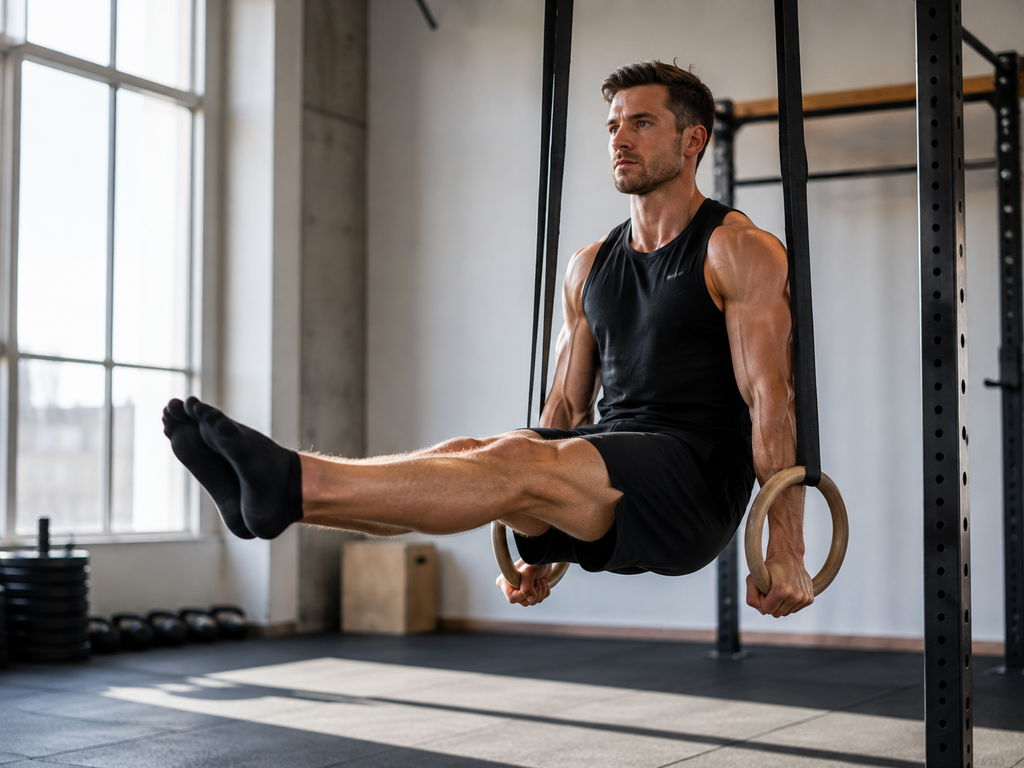
Straight-arm exercises require keeping the elbows locked out completely while moving or holding the body under load—such as planche progressions, front levers, L-sits, and ring support holds.
Because the elbows remain locked, force cannot be absorbed by flexing muscle bellies. Instead, the force is transferred directly through tendons, ligaments, joint capsules, and deep stabilizing muscles. Developing straight-arm strength thickens connective tissues over time, creating resilient joints that are far less prone to acute strains or overuse injuries.
The Core Engine: Hollow Body Compression
In gymnastics, core stability is not defined by performative abdominal crunches or sit-ups. True core strength is the ability to generate intense body compression and maintain pelvic alignment against heavy leverage forces.
The foundation of all gymnastic movement is the Hollow Body Position.
Hollow Body Alignment Checks:
- Lower back pressed 100% flat against the floor (Zero arch in lumbar spine).
- Posterior pelvic tilt engaged (Glutes squeezed tight).
- Legs locked out straight, toes pointed, raised 2-4 inches off the floor.
- Shoulder blades lifted off the ground, arms extended overhead.
Mastering the hollow body position teaches your brain to brace the entire anterior chain simultaneously. This compression power translates directly to maintaining rigidity during handstands, heavy barbell squats, kettlebell swings, and sprint mechanics.
Essential Gymnastic Elements for Fitness Enthusiasts
You do not need to perform elite Olympic maneuvers to gain the deep physical benefits of gymnastics training. Integrating these four foundational elements builds high-level strength and mobility:
- The L-Sit
- Target Muscle Groups: Triceps, Shoulders, Core, Hip Flexors
- Primary Physical Benefit: Extreme active hip compression & core strength
- Scalable Beginner Progression: Seated Tuck Hold on Floor or Parallettes
- Ring Support Hold
- Target Muscle Groups: Chest, Anterior Deltoids, Rotator Cuff
- Primary Physical Benefit: Scapular stabilization & shoulder health
- Scalable Beginner Progression: Feet-Assisted Ring Hold
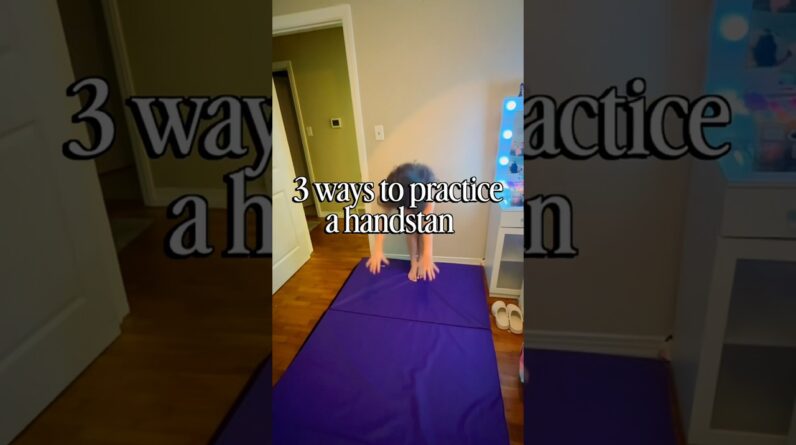
- Wall-Assisted Handstand
- Target Muscle Groups: Upper Traps, Shoulders, Triceps, Wrists
- Primary Physical Benefit: Overhead shoulder strength & spatial balance
- Scalable Beginner Progression: Wall-Facing Handstand Plank
- German Hang
- Target Muscle Groups: Biceps Tendons, Pec Minor, Anterior Deltoids
- Primary Physical Benefit: Shoulder flexibility & bicep tendon resilience
- Scalable Beginner Progression: Foot-Supported German Hang on Low Rings
Progressive Gymnastics Training Framework
Because you cannot simply add iron plates to your body during calisthenics, progression in gymnastics relies on altering leverage and joint angles.
How to Progress Bodyweight Movements:
- Leverage Manipulation: Extending your legs further away from your center of mass increases difficulty (e.g., advancing from a Tuck L-Sit to a Full Straddle L-Sit).
- Unstable Surfaces: Transitioning from stable ground or parallettes to free-hanging gymnastics rings forces stabilizing muscles to fire intensely.
- Tempo and Isometric Holds: Adding strict 3-to-5 second static holds at the hardest point of a movement increases neural drive and muscle fiber recruitment.
A Practical Weekly Gymnastic Conditioning Routine
Integrate this 30-minute gymnastics strength and mobility circuit into your routine 2 to 3 times per week as a standalone workout or as a pre-weightlifting skill block.
Phase 1: Joint Preparation & Wrist Mobility (5 Minutes)
- Wrist Rotations & Floor Palms-Up/Palms-Down Stretch: 2 Minutes.
- Shoulder Dislocates with Resistance Band: 10 Reps (Slow, controlled tempo).
- Cat-Cow Scapular Isolations: 10 Reps.
Phase 2: Core Compression & Isometric Holds (10 Minutes)
- Hollow Body Hold: 4 Sets x 20–30 Seconds (Rest: 60 secs).
- Parallette Tuck L-Sit Hold: 4 Sets x 10–15 Seconds (Rest: 60 secs).
- Wall-Facing Handstand Hold: 3 Sets x 30 Seconds (Rest: 90 secs).
Phase 3: Dynamic Strength & Ring Stability (15 Minutes)
- Gymnastic Ring Dips (or Parallette Dips): 3 Sets x 6–8 Reps (Pause 1 second at bottom, turn rings out at top).
- Inverted Ring Body Rows (Feet Elevated): 3 Sets x 8–10 Reps (Hold chest to rings for 1 second).
- Protracting Push-Ups (Scapular Push-ups): 3 Sets x 12 Reps.
- German Hang Stretch: 3 Sets x 20 Seconds (Passive shoulder extension stretch).
Rules for Injury Prevention in Gymnastic Training
- Never Rush Connective Tissue Adaptation: Muscle tissue adapts to stress in weeks; tendons and ligaments take months due to lower blood flow. Progress gradually.
- Prioritize Lockout Quality Over Rep Counts: A ring dip or push-up with soft, bent elbows robs you of straight-arm stabilization benefits. Complete every rep with full elbow extension.
- Respect Wrist and Shoulder Warm-Ups: Always spend 5 to 10 minutes mobilizing your wrists and shoulders before attempting isometric holds or handstand work.
#ad