Workout: Beyond the Burn: How to Structure Progressive Overload for Maximum Muscle Growth Without Burnout
Building muscle is not solely about enduring painful workouts and feeling the burn. Structured training methods, particularly progressive overload, can lead to sustained muscle growth without the risk of burnout. This article will guide you through effective strategies to implement progressive overload in your workout routines.
What is Progressive Overload?

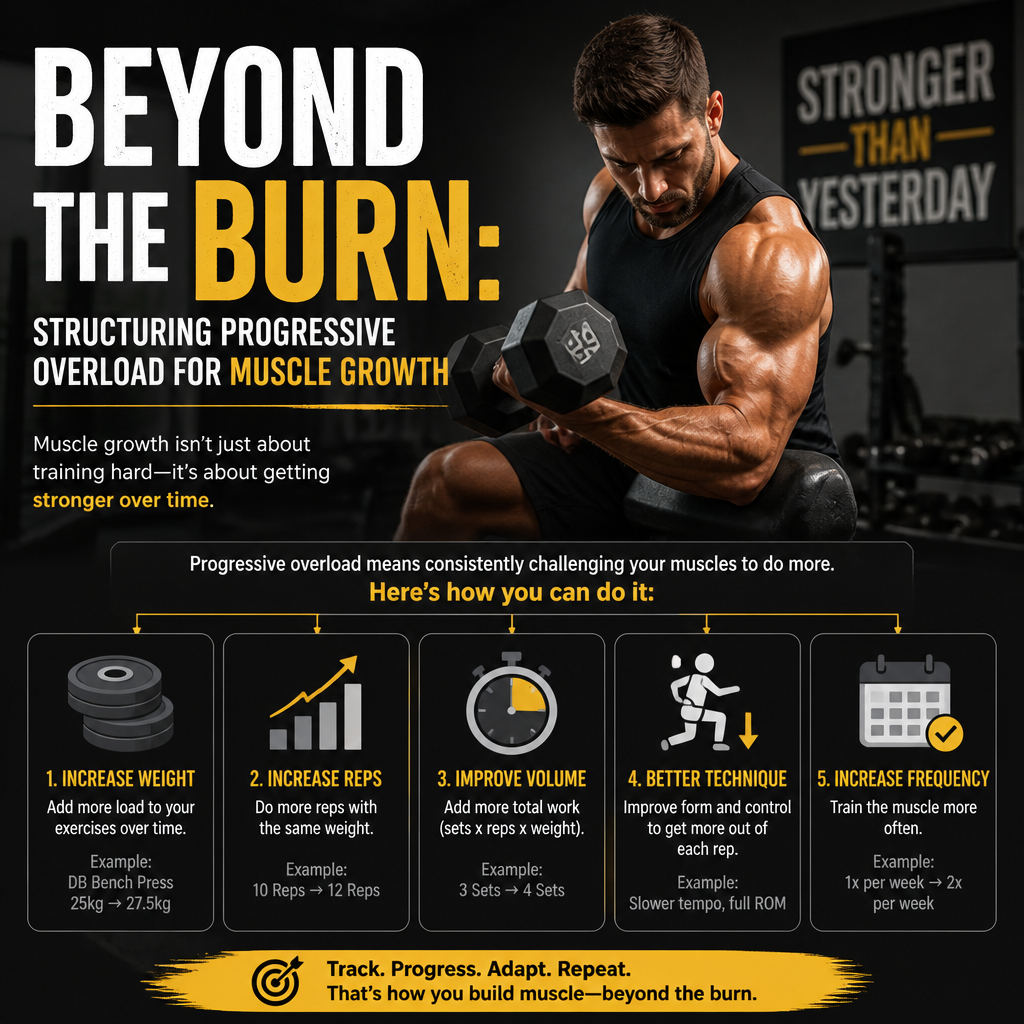
Progressive overload is the principle of gradually increasing the stress placed on your muscles during workouts. The goal is to push your body beyond its comfort zone to stimulate muscle growth and strength gains. This doesn’t always mean lifting heavier weights; it can also involve various other factors.
Methods of Progressive Overload
1. Increase Weight
The most straightforward method of progressive overload is adding weight. When you can complete a set with good form and without straining, increase the weight slightly for your next workout. This can be done in several ways:
- Incremental weight increases (e.g., 5 lbs or 2.5 lbs)
- Incorporating heavier weights for specific rep ranges
2. Increase Reps
If you prefer to maintain the same weight, focus on increasing the number of repetitions. Start with a manageable weight, and once you’re comfortable completing a certain number of reps (e.g., 8-12), aim for more.
3. Improve Form
Focusing on perfecting your technique can also lead to progressive overload. Enhancing your form can target muscles more effectively, facilitating growth without needing to increase weight or reps. This is particularly important for complex lifts.
4. Change the Tempo
Adjusting the speed of your lifts can greatly influence the intensity of your workouts. Slowing down your eccentric (lowering) phase can create more tension in your muscles. Consider techniques like:
- 3-second descents
- Explosive lifts (fast upward movement)
5. Increase Frequency
Another way to implement progressive overload is by increasing the frequency of your workout sessions. If you train a muscle group only once a week, consider increasing it to twice a week to enhance growth.
Planning Your Workouts
To effectively integrate progressive overload into your training routine, consider the following structure:
Weekly Schedule
-
Select Major Lifts: Focus on compound movements (squats, deadlifts, bench press) as they engage multiple muscle groups.
-
Split Training: Consider a split routine where you train different muscle groups on separate days (e.g., upper/lower body splits).
-
Recovery Time: Ensure adequate rest between sessions targeting the same muscle groups. Aim for 48-72 hours of recovery.
Tracking Progress
It’s essential to keep a record of your workouts. Document the following:
- Weights lifted
- Repetitions completed
- Sets performed
- Any concerns regarding fatigue or form
Using a workout log can help you monitor progress and make necessary adjustments.
Recognizing Signs of Burnout
Burnout can hinder muscle growth and lead to injuries. Be aware of the following signs:
- Persistent fatigue
- Loss of motivation
- Decreased performance
- Increased irritability
If you experience any of these, consider taking a deload week or adjusting your training intensity.
Balancing Intensity and Recovery
Balancing workout intensity with adequate recovery is crucial for sustainable muscle growth:
Incorporate Deload Weeks
Every 4-6 weeks, consider implementing a deload week where you lower both the volume and intensity of your workouts. This allows your muscles to recover and prepare for increased challenges.
Prioritize Nutrition
Fuel your body with a well-rounded diet that supports your training. Ensuring adequate protein intake is vital for muscle repair and growth. Aim for a balanced diet rich in:
- Protein: Chicken, fish, tofu, legumes
- Carbohydrates: Whole grains, fruits, vegetables
- Fats: Nuts, seeds, olive oil
Stay Hydrated
Proper hydration supports recovery and improves performance. Ensure you’re drinking water before, during, and after workouts.
Conclusion
Implementing progressive overload into your workouts is essential for maximizing muscle growth without succumbing to burnout. By varying your approach—weight, reps, form, tempo, and frequency—you can challenge your muscles effectively while allowing them to recover and adapt. Remember, sustainable progress requires patience and a balance between intensity and recovery. Embrace the journey and watch your strength and physique transform!
#ad