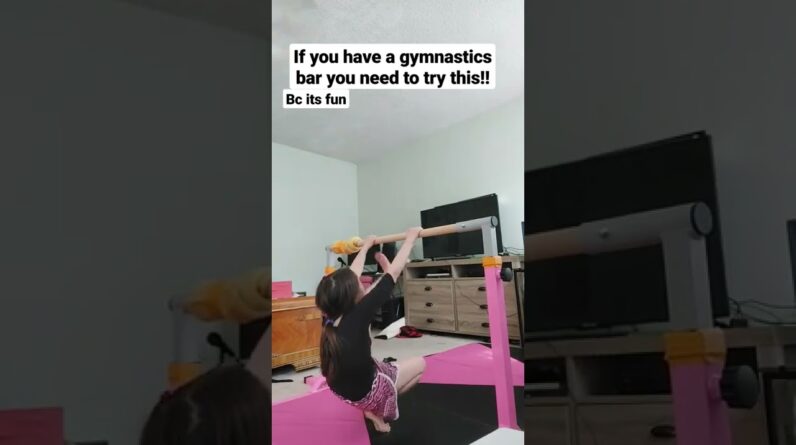
Flexibility is one of the defining physical qualities of gymnastics — the deep backbends, high leg extensions, and full split positions that make elite gymnastics visually striking all depend on a level of flexibility most people don’t naturally have. But flexibility isn’t a fixed trait you either have or don’t; it’s a trainable quality that improves steadily with consistent, properly structured practice. This guide breaks down how flexibility training actually works, and how to approach it safely, whether you’re a gymnast, a parent supporting a young athlete, or simply working on your own mobility.

Why Flexibility Matters Beyond Just Looking Impressive
Flexibility in gymnastics isn’t purely aesthetic — it directly affects performance and injury prevention. Greater range of motion allows for more efficient, controlled movement through skills, reduces excessive strain on joints during high-impact landings, and helps prevent the kind of muscle and tendon injuries that come from forcing a body into a position it isn’t prepared for.
Understanding the Two Types of Flexibility Training
- Static Stretching — Holding a stretch in a fixed position for an extended period (typically 20-60 seconds). This is the most familiar form of stretching and is generally most effective when done after training, once muscles are already warm.
- Dynamic Stretching — Moving through a range of motion in a controlled, repetitive way (like leg swings or arm circles). This type of stretching is better suited for warming up before training, since it prepares muscles for movement rather than relaxing them.
Both types have a place in a gymnast’s routine, but using them at the right time matters — static stretching before intense training can actually temporarily reduce muscle power output, which is why dynamic stretching is generally preferred as part of a pre-training warm-up.
Key Areas of Flexibility for Gymnastics
- Hip flexibility — Critical for skills like splits, leaps, and high kicks; often the most worked-on area for beginners
- Shoulder flexibility — Essential for handstands, bridges, and overhead positions
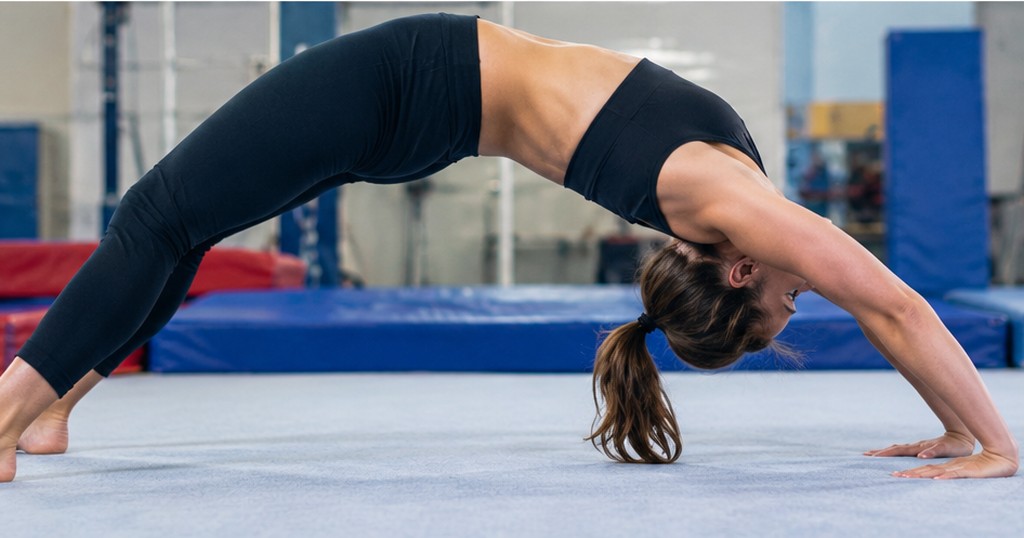
- Spinal flexibility — Needed for backbends and many acrobatic skills
- Ankle flexibility — Supports proper landing mechanics and pointed-toe positions common throughout gymnastics
A Sample Beginner Flexibility Routine
This routine can be done 3-4 times per week, ideally after a light warm-up or at the end of a training session when muscles are warm:
- Seated forward fold — Sit with legs extended, reach toward your toes, hold for 30 seconds. Targets hamstrings and lower back.
- Butterfly stretch — Sit with soles of feet together, gently press knees toward the floor, hold for 30 seconds. Targets hips and inner thighs.
- Lunge with a twist — Step into a low lunge, rotate your torso toward your front leg, hold for 20-30 seconds each side. Targets hip flexors and spine.
- Shoulder wall stretch — Place forearm against a wall at shoulder height, gently rotate away, hold for 20-30 seconds each side. Targets shoulder mobility.
- Bridge pose — From lying on your back, press hips upward into a bridge position, hold for 15-20 seconds, repeat 2-3 times. Targets spine and shoulder flexibility.
- Standing quad stretch — Pull one foot toward your glutes while standing, hold for 20-30 seconds each side. Targets quadriceps and hip flexors.
The Importance of Progressive, Patient Training
One of the most common mistakes in flexibility training — at any age — is trying to force progress too quickly. Flexibility gains happen gradually, as connective tissue adapts over weeks and months of consistent work, not days. Pushing into a stretch until it’s sharply painful, or bouncing aggressively into a position, significantly increases injury risk without actually speeding up long-term progress.
A far more effective (and safer) approach is consistent, moderate-intensity stretching where you feel tension but not pain, gradually increasing range of motion over time as your body adapts.
Should You Stretch Every Day?
For general flexibility maintenance, most gymnasts benefit from stretching 3-5 times per week rather than daily maximal-intensity sessions. Muscles and connective tissue, like other trainable tissues, benefit from some recovery time between intense flexibility sessions, particularly when working toward more advanced positions like full splits or deep backbends.
Common Mistakes to Avoid
- Stretching cold muscles — Always warm up with light movement first, even for a “quick” stretch session
- Comparing your flexibility to others — Natural flexibility varies significantly between individuals; progress should be measured against your own starting point
- Skipping strength work — Flexibility without corresponding strength in that range of motion can actually increase injury risk; mobility and strength should be developed together
- Forcing positions with poor form — Using momentum or someone pushing you into a stretch beyond your control increases injury risk substantially
The Bottom Line
Flexibility in gymnastics is built the same way strength is — through consistent, patient, properly structured practice over time, not through forcing dramatic progress in a single session. Focus on the fundamentals, respect your body’s current limits, and trust that steady, moderate effort will produce real, lasting improvement in range of motion over weeks and months.
#ad