The Science of Hypertrophy: How to Build an Effective Strength and Muscle Growth Plan

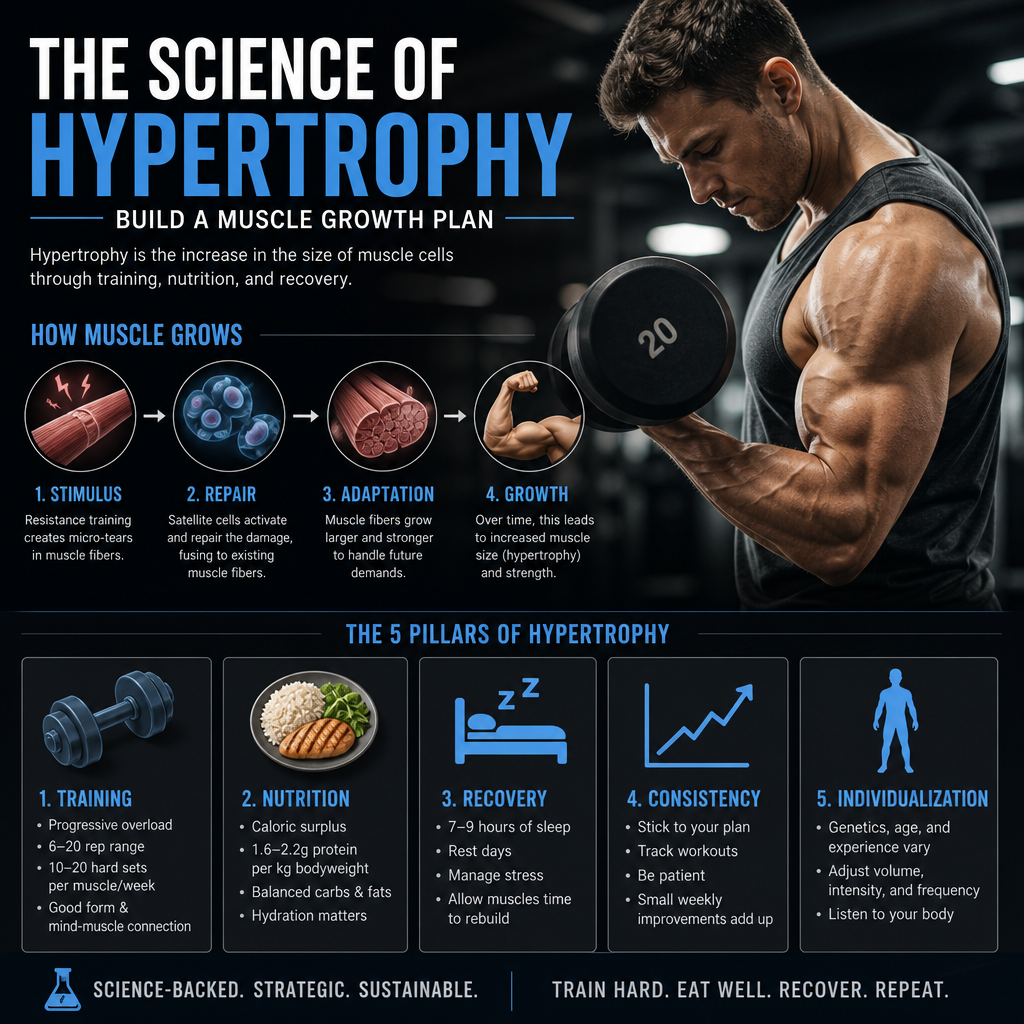
Hypertrophy, the process of muscle growth, is a vital concept for anyone looking to increase their strength and muscle size. Understanding the science behind hypertrophy can lead to more effective workout plans and nutrition strategies. In this article, we will explore the mechanisms of hypertrophy, factors that influence it, and how to craft a growth-focused fitness plan.
What is Hypertrophy?
Hypertrophy occurs when muscle fibers increase in size in response to stress, typically through resistance training. It is primarily categorized into two types:
- Myofibrillar Hypertrophy: This type focuses on increasing the size and number of myofibrils, enhancing muscle density and strength.
- Sarcoplasmic Hypertrophy: This involves an increase in the volume of sarcoplasm, the non-contraction part of the muscle, improving endurance more than strength.
Understanding the Mechanisms of Hypertrophy
Hypertrophy is influenced by three primary mechanisms:
-
Mechanical Tension: Building muscle requires heavy weights and resistance that create tension on the muscles. This tension leads to micro-tears in muscle fibers, which, when repaired, results in larger muscles.
-
Muscle Damage: Exercise-induced muscle damage triggers repair processes. The body responds by sending satellite cells to the site of injury, promoting muscle repair and growth.
-
Metabolic Stress: Training with higher reps and shorter rest periods leads to metabolic byproducts, creating a burning sensation in the muscles. This stress signals the body to build muscle for future resistance.
Key Factors Influencing Hypertrophy
To effectively stimulate hypertrophy, several critical factors should be taken into account:
1. Exercise Selection
Incorporate compound exercises such as:
- Squats
- Deadlifts
- Bench Press
- Pull-Ups
These movements engage multiple muscle groups and promote greater overall growth.
2. Training Volume
Training volume refers to the total amount of work done. Aim for:
- 3-5 sets per exercise
- 6-12 reps per set
A higher volume is generally more effective for hypertrophy, as it increases metabolic stress and muscle damage.
3. Progressive Overload
To continuously stimulate growth, you need to incorporate progressive overload. This can be achieved by:
- Increasing weights
- Adding more reps
- Decreasing rest times
Progressive overload ensures that your muscles are consistently challenged, promoting growth.
4. Rest and Recovery
Muscles need time to repair and grow. Focus on:
- Sleep: Aim for 7-9 hours of quality sleep each night to optimize recovery.
- Rest Days: Create a workout schedule that includes rest or active recovery days.
Crafting Your Muscle Growth Plan
Now that we understand the science of hypertrophy, let’s outline an effective strength and muscle growth plan.
Weekly Workout Structure
Aim for 4-5 days per week of resistance training, with focus areas as follows:
- Day 1: Upper Body (Push)
- Day 2: Lower Body
- Day 3: Upper Body (Pull)
- Day 4: Lower Body
- Day 5: Full Body or Accessory Work
Sample Workout Routine
Day 1: Upper Body (Push)
- Bench Press: 4 sets of 8-10 reps
- Overhead Press: 3 sets of 8-10 reps
- Dips: 3 sets of 8-10 reps
Day 2: Lower Body
- Squats: 4 sets of 6-8 reps
- Deadlifts: 3 sets of 6-8 reps
- Lunges: 3 sets of 10 reps per leg
Day 3: Upper Body (Pull)
- Pull-Ups: 4 sets of 6-8 reps
- Bent Over Rows: 3 sets of 8-10 reps
- Face Pulls: 3 sets of 12-15 reps
Day 4: Lower Body
- Romanian Deadlifts: 4 sets of 8-10 reps
- Leg Press: 3 sets of 10-12 reps
- Calf Raises: 3 sets of 12-15 reps
Day 5: Full Body
- Clean and Press: 4 sets of 6-8 reps
- Kettlebell Swings: 3 sets of 12-15 reps
- Plank: 3 sets of 30-60 seconds
Nutrition for Muscle Growth
Nutrition plays a crucial role in hypertrophy. Focus on a balanced diet that includes:
- Sufficient protein intake (1.6-2.2 grams per kg of body weight)
- Complex carbohydrates for energy
- Healthy fats to support hormone production
Conclusion
Building an effective strength and muscle growth plan requires an understanding of hypertrophy and its key components. By focusing on exercise selection, training volume, progressive overload, and proper recovery, you can maximize your muscle-building potential. Remember, consistency and dedication are key to achieving your fitness goals.
#ad