Nutrition: Fueling the Engine
Optimal nutrition is crucial for anyone looking to enhance performance, whether you’re an athlete or a fitness enthusiast. Understanding how to time your protein, carbohydrates, and hydration can significantly impact your performance. In this guide, we will explore the science behind nutritional timing and its benefits.
The Role of Protein

Why Protein Matters
Protein is essential for muscle repair and growth. Consuming adequate protein helps prevent muscle breakdown and promotes recovery after workouts.
Timing Your Protein Intake
To maximize protein synthesis, aim to consume protein-rich foods at specific times:
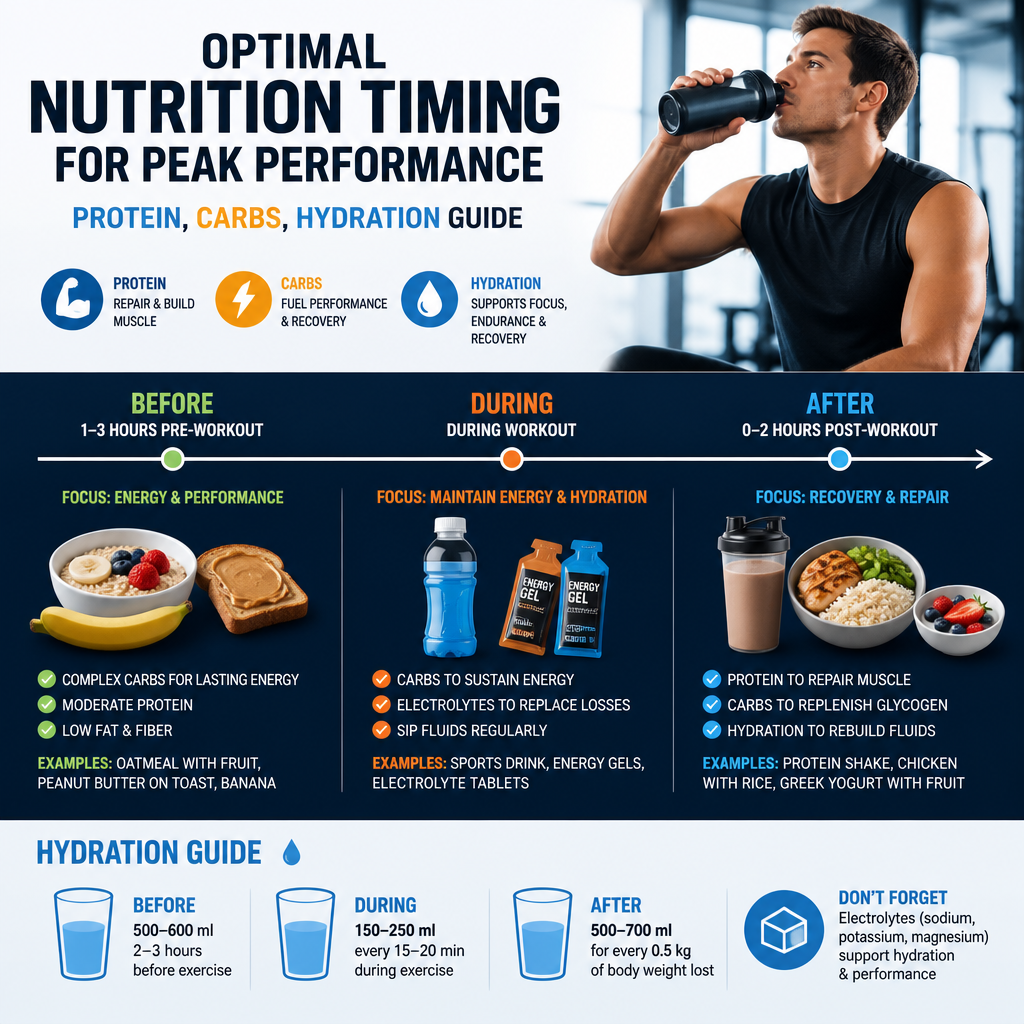
- Post-Workout: Aim to consume 20-30 grams of protein within 30 minutes after your workout. This is often referred to as the “anabolic window.”
- Throughout the Day: Spread your protein intake evenly across meals. It’s generally recommended to include 20-30 grams of protein in each meal to support muscle maintenance.
Carbohydrates: Your Energy Source
Understanding Carbs
Carbohydrates are the body’s preferred source of energy, especially during high-intensity exercise. They fuel your muscles and brain, ensuring optimal performance.
Carbohydrate Timing Strategies
Timing your carb intake can help maximize energy levels:
- Before Exercise: Consume complex carbohydrates 1-3 hours before a workout. Foods like oatmeal, whole-grain bread, or brown rice provide sustained energy.
- During Exercise: For prolonged activities, such as endurance sports, consume 30-60 grams of fast-digesting carbohydrates (gels, bananas) per hour to maintain energy levels.
- Post-Workout: Replenish glycogen stores with a combination of protein and carbs after exercise. A ratio of 3:1 (carbs to protein) is often recommended.
Hydration: Staying Optimally Fueled
The Importance of Hydration
Proper hydration is paramount for peak performance. Even a slight decrease in water levels can impair strength, endurance, and cognitive function.
Hydration Strategies
- Before Exercise: Aim for at least 500 mL of water 2-3 hours before working out.
- During Exercise: Drink 200-300 mL every 15-20 minutes, adjusting based on the intensity of your workout and weather conditions.
- Post-Exercise: Rehydrate with water or electrolyte drinks. A good rule of thumb is to drink 1.5 times the amount of fluid lost during exercise.
Practical Tips for Nutritional Timing
Meal Planning
- Pre-Workout Meal: Include protein and complex carbs. A meal like grilled chicken with quinoa and vegetables can fuel your workout.
- Post-Workout Snack: A smoothie with protein powder, a banana, and almond milk is quick and effective.
Keep a Schedule
Consistency is key. Develop a nutritional schedule that coincides with your training regimen. This ensures your body receives necessary nutrients at the right time.
Listen to Your Body
Everyone’s nutritional needs differ. Pay attention to how your body responds to various nutrient timings and adjust accordingly.
Conclusion
Successfully timing your protein, carbohydrates, and hydration can lead to enhanced performance, quicker recovery, and overall better health. By strategically planning your meals and understanding the science behind nutrient timing, you can fuel your body like a finely tuned engine. With the right approach to nutrition, you’ll find yourself performing at your peak potential.
#ad